


Fans of Indian cinema all over the world are now well aware of the revolution that the two “Dhurandhar” movies have brought to the Indian cinema industry. It has become an extremely successful production of Indian commercial cinema and has broken many box office records. Apart from that, there have been various critics opinions about its content, theme, acting talents. According to the opinion of many critics of commercial cinema, this film duo is considered a success in every respect.
It is special that both the first and second films of “Dhurandhar” were screened in a very short span of time. The first film was released in December 2025, followed four months later in March 2026 by the second titled “Dhurandhar The Revenge”. According to reports, the film duo has grossed over INR 32 billion. It is also a special fact that this kind of success has been achieved in the background of limited screenings in the Middle East region.
After the first movie was screened, we studied and inquired about one of its contents. People who have seen the movie may remember the violence, killing scenes and terrorist activities in it. Also, scenes related to smoking, alcohol use and drugs were included in a special amount. Therefore, this article focuses not on the film’s cinematic success, but on content that may affect public health.
According to our observations, 10% to 12% of the total running time of the two films is devoted to smoking scenes. That is, about 18 minutes of the first film and about 27 minutes of the second film are used to depict the use of cigarettes, cigars and cigars.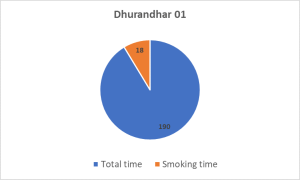

Although the inclusion of such scenes in cinematography can be considered as a normal situation, the amount of space given for such scenes in “Dhurandhar” films can be seen in the analysis of time.
These two works contain almost 100 scenes with smoking, in some cases smoking is depicted as a symbol of glamor, beauty and heroism. In other cases it is presented as part of normal lifestyle. When smoking and alcohol scenes are considered together, the time allocated to them is more than 15% of the films total running time.
Let us leave it to film critics and researchers to investigate whether the depiction of smoking in such a large amount in the “Dhurandhar” duo is merely a cinematic choice, or a commercially motivated approach.
History has also revealed several instances of connections between tobacco companies and the film industry.
– It has been reported that the cigarette company paid $350,000 for the advertisement of “Lark” cigarettes in the 1989 James Bond movie “License To Kill”.
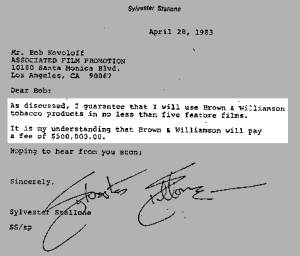
– Browns & Williamson tobacco company has given Sylvester Stallone $500,000 to include smoking scenes in 05 movies in which he is acting, corporate reports have revealed.
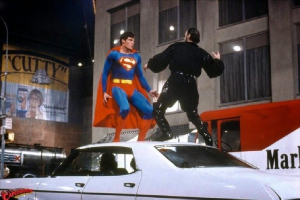
-There is evidence that a tobacco brand was paid $43,000 for Superman II and $30,000 for Supergirl.
Smoking is one of the most serious risks to global public health. WHO is implementing strategic programs with governments, institutions and various sectors to reduce the harm caused by tobacco use.
As the South Asian region in particular is heavily affected by tobacco use, we believe that all sectors should contribute at least to prevent the promotion of cigarettes and other tobacco products.
Cinema is not only a medium of entertainment but also a powerful medium of communication that creates attitudes, behaviors and socio-cultural patterns. Therefore, it is also important to consider its content in relation to public health.
Leave a Reply